

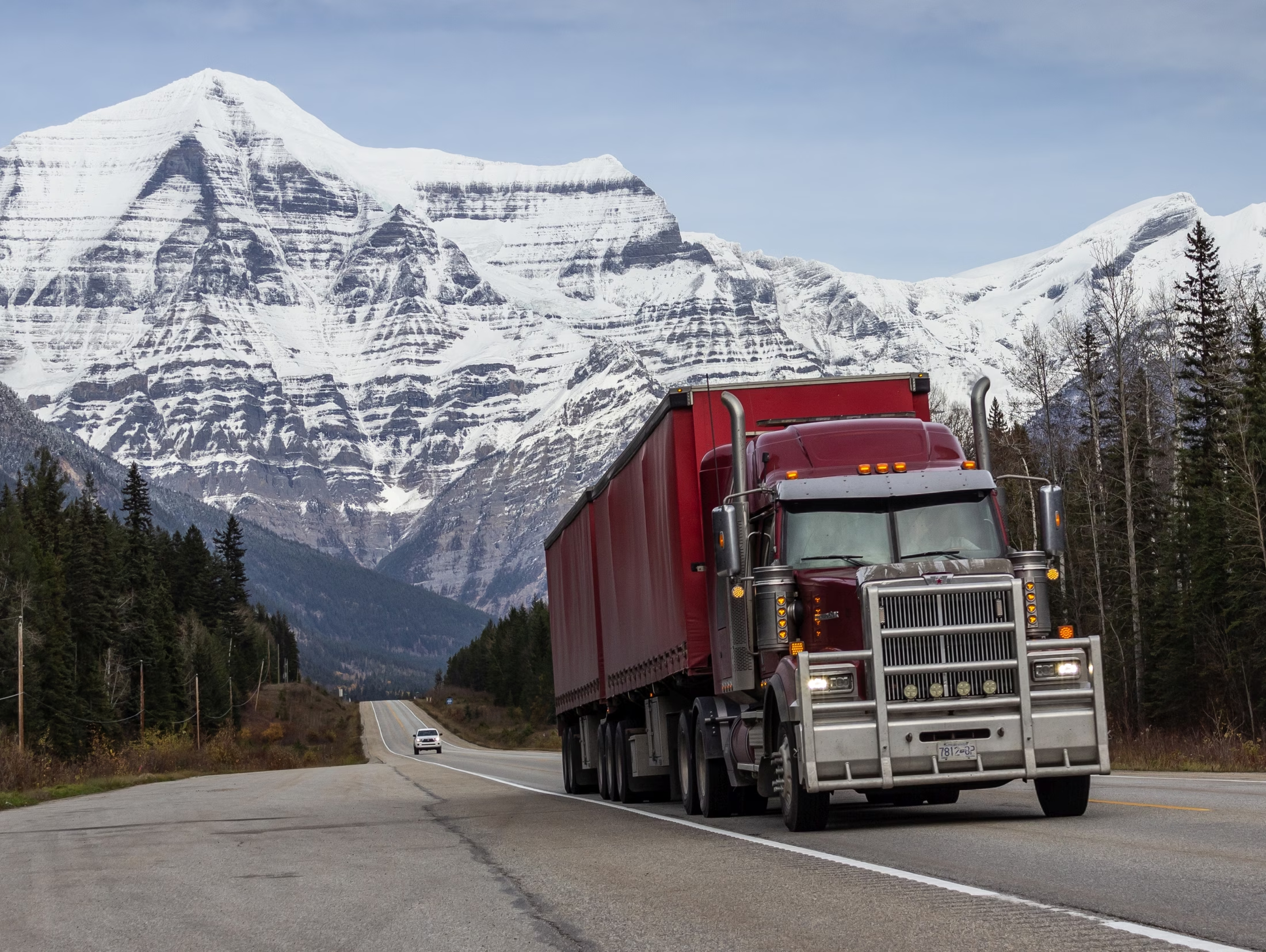
The Canadian trucking industry is facing a significant shortage of skilled professionals. This makes it a highly reliable sector for foreign workers wanting to relocate. If your goal is a new life in North America rather than just a temporary work permit, you need a clear strategy. Navigating the path to Permanent Residency in Canada for commercial drivers has evolved in 2026. Here is what you need to know to establish your career in Canada.
The Shift in 2026: Express Entry and PNP
For years, commercial drivers classified under NOC 73300 hoped for direct invitations through the Federal Express Entry system. While transport category draws still exist, the Canadian government has recently shifted its focus toward regional needs under the current Immigration Levels Plan.
The most efficient pathway to Permanent Residency as a transport truck driver in 2026 is the Provincial Nominee Program (PNP). Provinces are actively looking for drivers and have created dedicated streams specifically for this occupation.
The Best Provinces for Truck Driver Immigration
If you want to accelerate your Permanent Residency application, you should focus your job search on these three provinces:
- Ontario (OINP): Ontario handles the bulk of freight in Canada. If you secure a valid job offer from an Ontario employer under the In-Demand Skills stream, you can apply for a provincial nomination. This significantly improves your chances for Permanent Residency.
- Alberta (AAIP): The economy in Alberta relies heavily on logistics. Their immigration streams are very accessible for transport truck drivers, especially those willing to work in regional areas outside of major cities like Calgary and Edmonton.
- Saskatchewan (SINP): This is a historically strong pathway. If you work for an approved trucking firm in Saskatchewan on a temporary work permit for at least six months, you can apply for Permanent Residency under the specific Long-Haul Truck Driver Project.
Core Requirements for Applicants
To successfully apply under NOC 73300, you must meet several baseline criteria:
- Job Offer: A permanent job offer from a Canadian employer, usually supported by a Labour Market Impact Assessment (LMIA).
- Experience: At least one to two years of verifiable commercial truck driving experience in your home country.
- Language Skills: You must pass an approved language test like IELTS or CELPIP and score a minimum of CLB 4. A score of CLB 5 or higher is highly recommended to improve your ranking.
- Clean Record: A clean criminal background and a flawless driving abstract are mandatory.
Conclusion
Getting your Permanent Residency in Canada as a truck driver in 2026 requires the right strategy. Instead of waiting in the general Express Entry pool, focus on securing a solid job offer in provinces with strong PNP streams like Ontario or Alberta. Once you receive your provincial nomination, your pathway to becoming a Permanent Resident is clearly defined.
Sources: Immigration, Refugees and Citizenship Canada (IRCC) 2026 Immigration Levels Plan; National Occupational Classification (NOC) Guidelines, TruckstopCanada Editorial Team
Photo: Eurotransport