

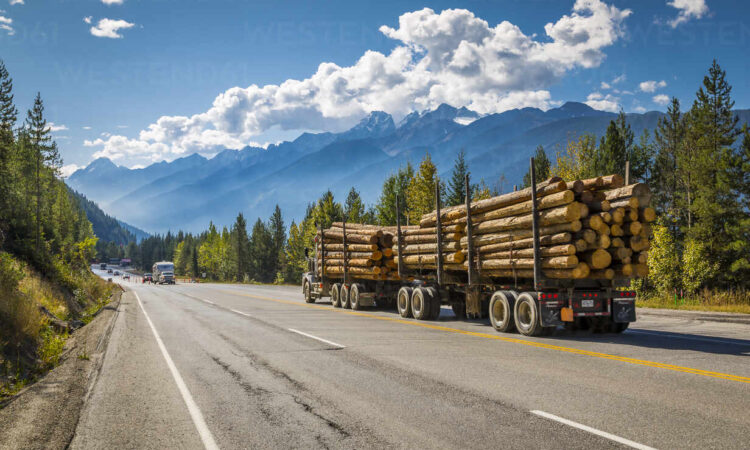
Operating a commercial vehicle on a well-paved section of the Trans-Canada Highway requires skill, but transporting heavy industrial equipment through the rugged terrain of Canada’s backcountry is an entirely different discipline. The Canadian economy is heavily supported by its natural resources, and moving massive payloads for these industries requires specialized purpose-built equipment and highly trained operators. In 2026, specialized transport in regions like Alberta and British Columbia remains a technically demanding and highly respected sector within the trucking industry.
Precision in the Forests: Logging Operations in British Columbia
The forestry industry in British Columbia presents unique logistical challenges. Timber is frequently harvested in remote environments where resource roads feature steep gradients and tight switchbacks. Transporting raw logs out of these areas requires highly modified heavy-duty trucks.
Drivers in the logging sector typically operate quad-axle or tridem trailers equipped with heavy-duty bunks and stakes, which are specifically designed to safely secure raw timber. The vehicles themselves rely on high-torque engines, aggressive engine brakes, and robust off-road suspension systems. A successful logging truck driver must have an excellent understanding of weight distribution and vehicle dynamics to maintain traction and stability on unpaved mountain grades when fully loaded.
Heavy Iron: Oilfield Hauling in Alberta
The energy sector in Alberta demands a different approach to specialized logistics. Supplying remote oil sands or natural gas drilling sites involves transporting oversized machinery, drilling rigs, and massive steel pipes.
This operational environment is the primary domain of bed trucks and winch tractors. These specialized, reinforced vehicles are essential for oilfield hauling. They allow operators to use heavy-duty winches to load massive, skid-mounted equipment directly onto the truck bed in the field, eliminating the need for external cranes. Fluid hauling is equally specialized, requiring drivers to pull heavily reinforced tanker trailers over rutted resource roads while actively managing the momentum of liquid surges.
Equipment for Northern Realities
Operating specialized transport equipment in the Canadian resource sectors requires extensive preparation for severe weather. Winter temperatures in northern Alberta and British Columbia consistently drop well below freezing. Surviving and operating efficiently in these conditions requires proper vehicle winterization.
Fleets utilize advanced engine block heaters, heated fuel lines, and severe-duty tire chains designed for solid ice. Additionally, because cellular service is virtually non-existent on many remote resource roads, drivers rely heavily on satellite communication devices for dispatch updates and carry mandatory winter survival gear to ensure safety during unexpected breakdowns.
Conclusion
Specialized transport in the Canadian logging and oilfield sectors forms the logistical backbone of the national resource economy. The equipment is intricately engineered to handle heavy payloads and challenging climates. For commercial drivers in 2026, transitioning into this specialized heavy-haul sector offers excellent career opportunities and financial rewards, provided they possess the technical expertise to operate these complex vehicles safely in remote environments.
Sources: British Columbia Ministry of Transportation and Infrastructure Commercial Vehicle Guidelines; Alberta Motor Transport Association (AMTA) Resource Sector Reports 2026; TruckstopCanada Editorial Team.
Photo: Westend61
Disclaimer: Weight limits, axle configurations, and equipment regulations vary significantly by province and specific resource road rules. Always verify current provincial regulations and ensure appropriate permits are secured before operating specialized transport equipment.